35 years of Ötzi the Iceman - September 19, 1991
September 19, 2026, marks the 35th anniversary of the discovery of Ötzi, the Iceman. What started as a chance discovery at Tisenjoch Pass in 1991 has become one of the most famous archaeological finds in the world. To this day, interest in the 5,300-year-old glacier mummy, his clothing, and his equipment remains constant among visitors as well as in the media and the scientific community. New research methods continually give us new perspectives on life in the Copper Age and on the human body. The South Tyrol Museum of Archaeology is simultaneously laying the groundwork to preserve Ötzi for future generations and working on contemporary ways to share him with the public.
A Chance Discovery Becomes an Archaeological Sensation
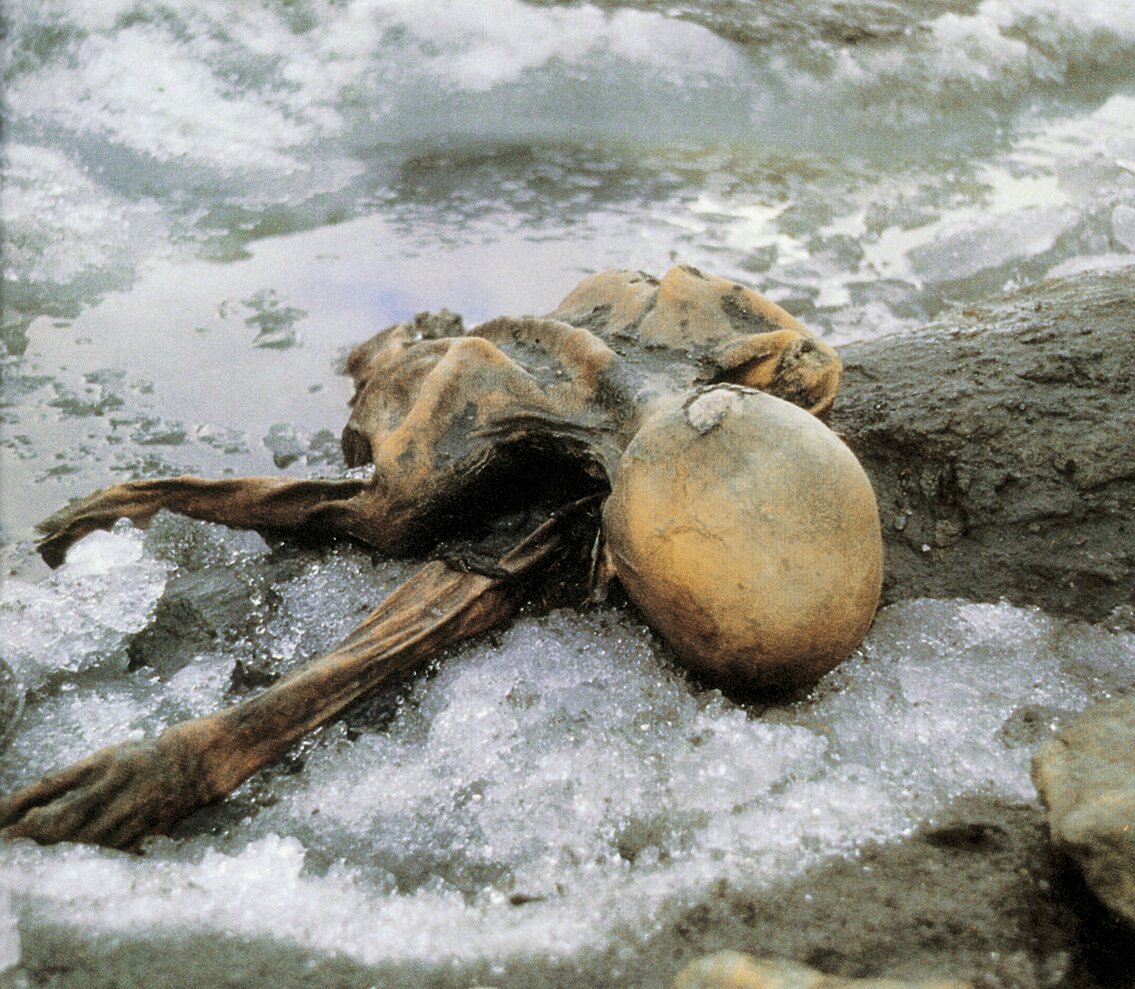
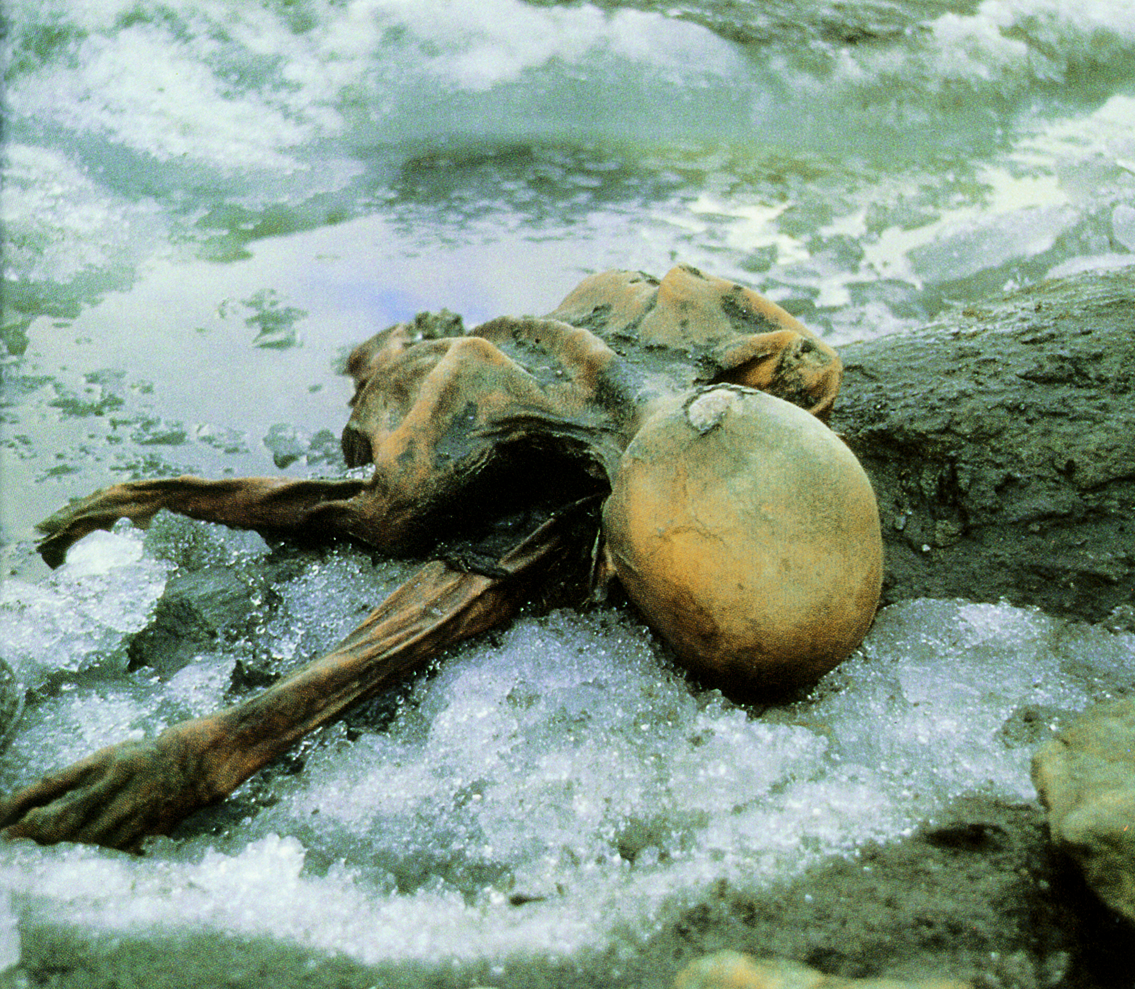
On September 19, 1991, Erika and Helmut Simon from Germany discovered a human body in the ice during a hike at Tisenjoch Pass in the Ötztal Alps. Only after the body was recovered from the site did it become clear that this was not a mountaineer who had died in a recent accident, but rather a person from the Copper Age. The mummy and its associated finds – clothing, tools, weapons, and other equipment – had all remained exceptionally well preserved for more than five millennia.
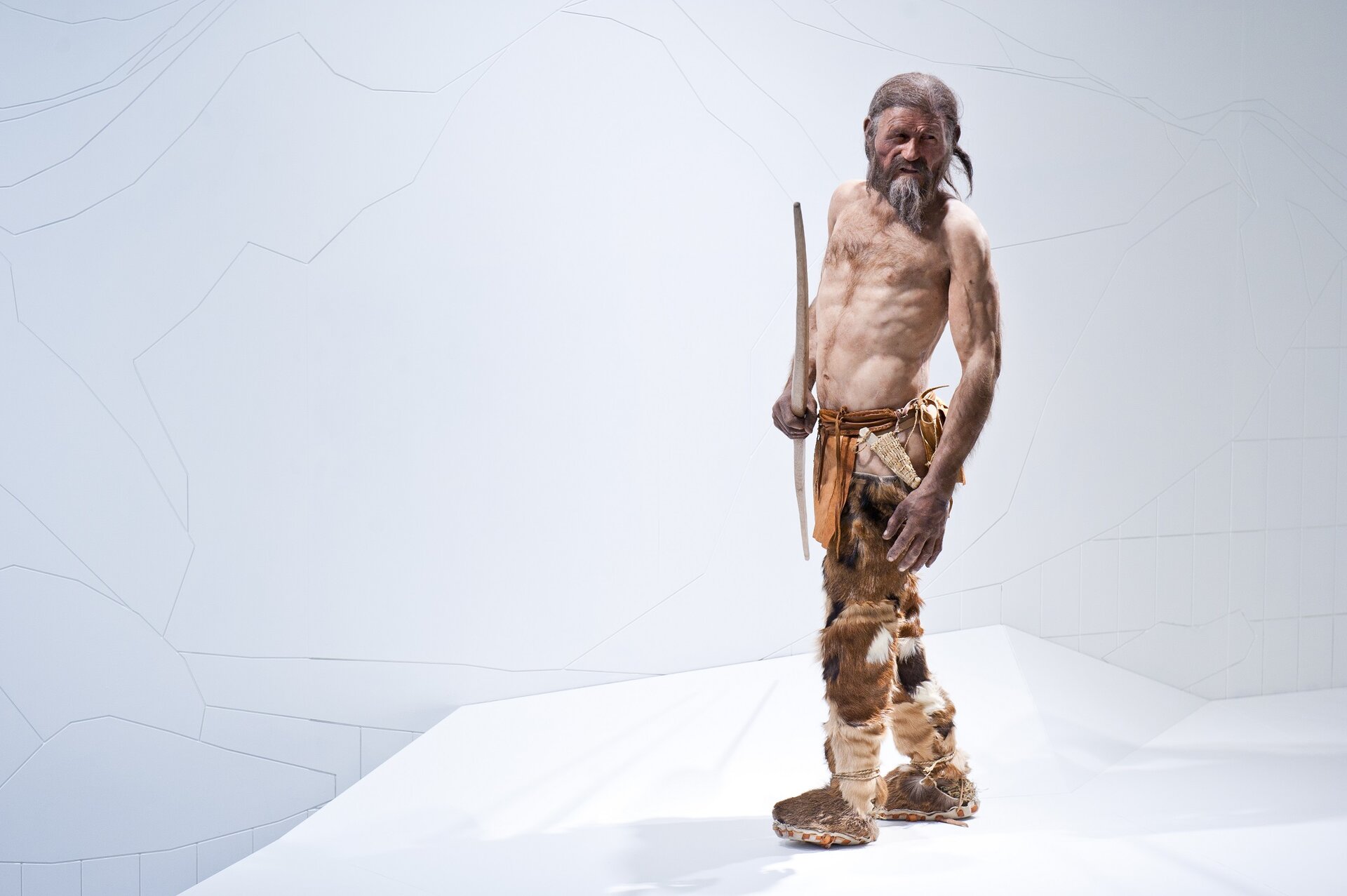
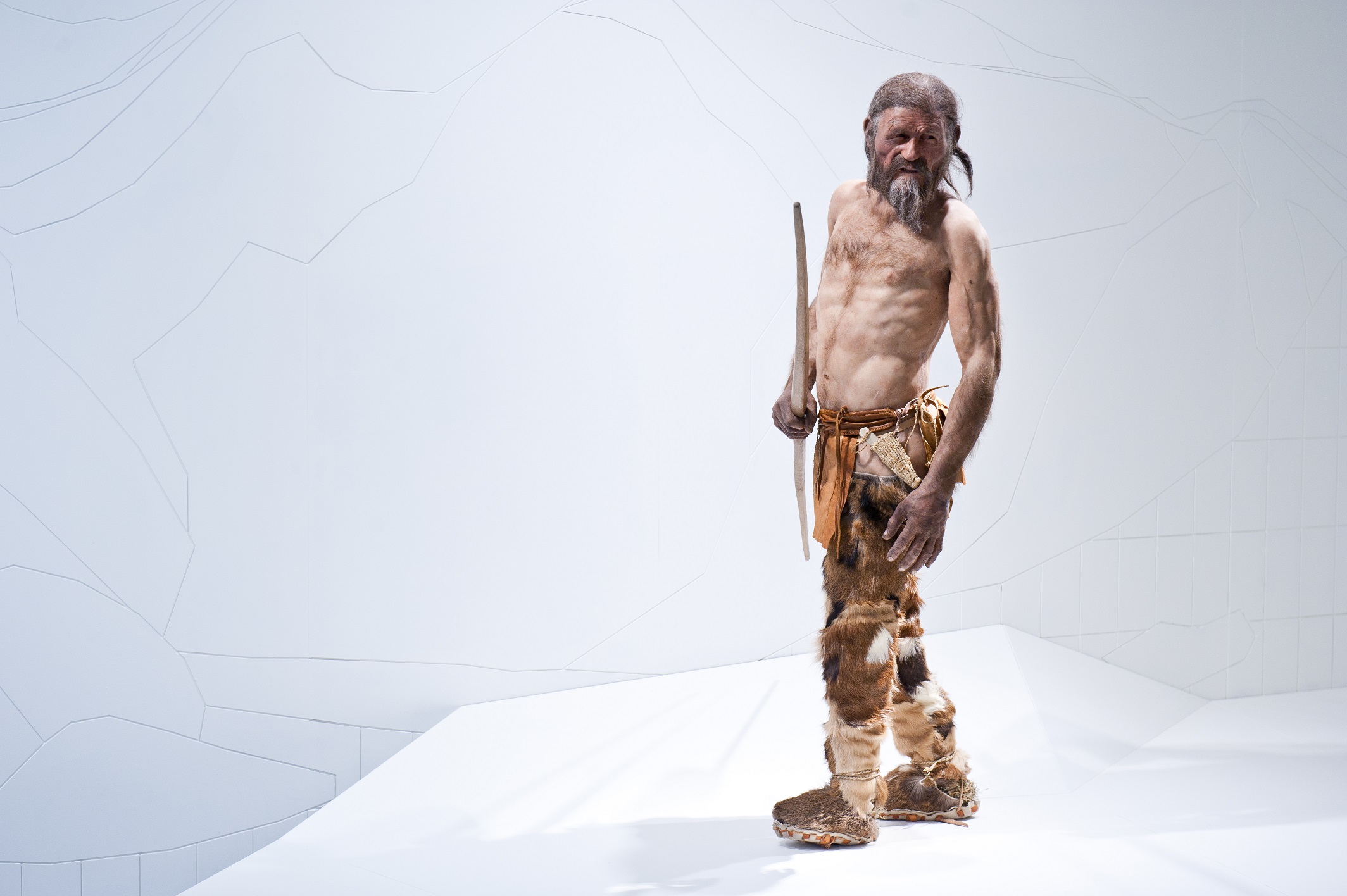
It is precisely this combination that makes the finds unique to this day. At about 5,300 years old, the Iceman is the oldest wet mummy in the world. His almost completely preserved clothing and equipment provide an unusually vivid image of the daily life, technical knowledge, and craftsmanship of a person from the Early Copper Age. Fur clothing, lined shoes, a copper axe, a flint dagger, a bow and arrows, birch bark vessels, and many other objects are both impressive originals as well as important sources for archaeological research.
From Find to Museum Magnet
The discovery of Ötzi provided the catalyst for establishing South Tyrol’s own provincial archaeological museum. Since 1998, the mummy and his restored artifacts have been on display in the South Tyrol Museum of Archaeology on Museum Street in Bolzano. In 2011, the permanent exhibition on the Iceman was expanded to encompass three floors and has since been continuously updated to reflect new research findings.
Today global interest remains consistently high. Since the museum opened, more than seven million people have visited its permanent and special exhibitions. With nearly 300,000 visitors per year, it is the most visited museum in South Tyrol.
This enduring fascination cannot be explained solely by people coming face to face with the mummy himself. The story of his discovery, the personal questions surrounding his life and death, and his unusually well-preserved equipment also make Ötzi a globally recognized symbol of prehistory.
35 Years of Research – And by No Means Has Everything Been Deciphered Yet
Ötzi is simultaneously an archaeological find of exceptional importance and an interdisciplinary research subject. Well over 900 researchers from all over the world have studied the Iceman so far. The knowledge acquired from this research is documented in hundreds of peer-reviewed scientific publications.
Many of the findings that are now taken for granted in our understanding of Ötzi would not have been possible to know with the technology and methods that were available 35 years ago. Medical imaging, genetic analyses, microbiological studies, and modern scientific methods have gradually yielded new information about his origins, health, diet, appearance, and circumstances of death. Thus, the Iceman gives a glimpse into the lives of Copper Age people and provides valuable findings for a variety of scientific disciplines.
“The fact that Ötzi continues to fascinate people around the world, even 35 years after his discovery, underscores the extraordinary significance of this find. For us as a museum, it is therefore a central mission to preserve this unique collection of artifacts for future generations and to give it the space and contemporary presentation that do justice to its significance”, says Elisabeth Vallazza, director of the South Tyrol Museum of Archaeology.
Preservation For the Future
A central mission of the South Tyrol Museum of Archaeology is the long-term preservation of the mummy. Ötzi is kept in a one-of-a-kind refrigerated chamber that was specifically developed for him. Conditions inside closely mimic those in a glacier, while still allowing visitors to view the mummy. The chamber is kept at a constant temperature of -6 °C and approximately 99 percent relative humidity. Temperature, humidity, and other parameters are monitored around the clock.
The current cooling system has been in continuous operation since the museum opened in 1998. Despite regular maintenance, it is now reaching its limits. The system will therefore be replaced starting in autumn 2027. With this investment, the province of South Tyrol is making a targeted effort to ensure the long-term preservation of one of its most important cultural assets.
Looking Ahead: More Space For Ötzi And South Tyrol’s Archaeology
In terms of physical space, the museum is also looking to the future. The current building on Museum Street has been operating at full capacity for many years due to the high level of public interest. At the political level a decision has been made to establish a new museum site not far from the current one. This new site will provide more room for the Iceman collection and for a comprehensive exhibition of South Tyrol’s archaeology.
35 years after he was discovered, Ötzi is by no means just a spectacular find from the past. He remains the subject of current research, a challenge for conservation, and the starting point for further development of the museum. The story of the Iceman is far from over.
September 19, 2026: “Survive in the Stone Age!”
The Iceman’s anniversary is the occasion for a special day in the fresh air led by survival and Stone Age expert, Philipp Schraut. In the great outdoors, participants will be able to learn and try out techniques that people like Ötzi used in their daily lives: finding and using natural resources, making Stone Age equipment, working with flint blades, preparing food, and savoring a Stone Age meal together.
The event will take place on Saturday, September 19, 2026, from about 9:00 AM to 4:30 PM in the vicinity of Percha/Perca. It is open to anyone aged 18 and over. Please register by September 15th by calling 0471 320112 or by emailing office@iceman.it.
LINK: Survive in the Stone Age
Photos:
• The discovery of Ötzi the Iceman, September 1991 © South Tyrol Museum of Archaeology / Paul Hanny
• The reconstruction of Ötzi the Iceman by Alfons and Adrie Kennis (2011), at the South Tyrol Museum of Archaeology © South Tyrol Museum of Archaeology / foto-dpi.com
• The museum’s director Elisabeth Vallazza © South Tyrol Museum of Archaeology / Andreas Tauber
other images see our media web page
Images can be used free of charge if used for press purposes only.
Press office
Katharina Hersel
South Tyrol Museum of Archaeology
Museumstr. 43, I-39100 Bolzano/Bozen, Italy
T +39 0471 320114
press@iceman.it , www.iceman.it
# OetziTheIceman